One of the most prominent topics currently shaping business discussions is how artificial intelligence will transform professions, which roles it may replace, and what the future of work will look like. Recent forecasts and research are drawing increasingly clear boundaries around the digital world while highlighting a striking reality: artificial intelligence is rapidly taking over routine digital tasks, while fields that require advanced physical skills, the ability to respond immediately to changing site conditions, human interaction, and critical decision-making continue to rely heavily on human expertise.
So, where does this leave our industry, which extends beyond office-based theories to encompass everything from cement plants to large-scale power plants, building turnkey EPC facilities amid iron, steel, and fire? As an industry responsible for installing heavy equipment and establishing construction sites across the globe, from deserts to remote mountainous regions, where do we stand amid this wave of artificial intelligence?
From our perspective, the issue is not simply the concern that technology might take over our jobs. Rather, it is an opportunity to rediscover just how unique and indispensable human judgment and effort remain in heavy industry.
From Digital Designs to Muddy Construction Sites: The Digitalization of Engineering and the Reality of the Field
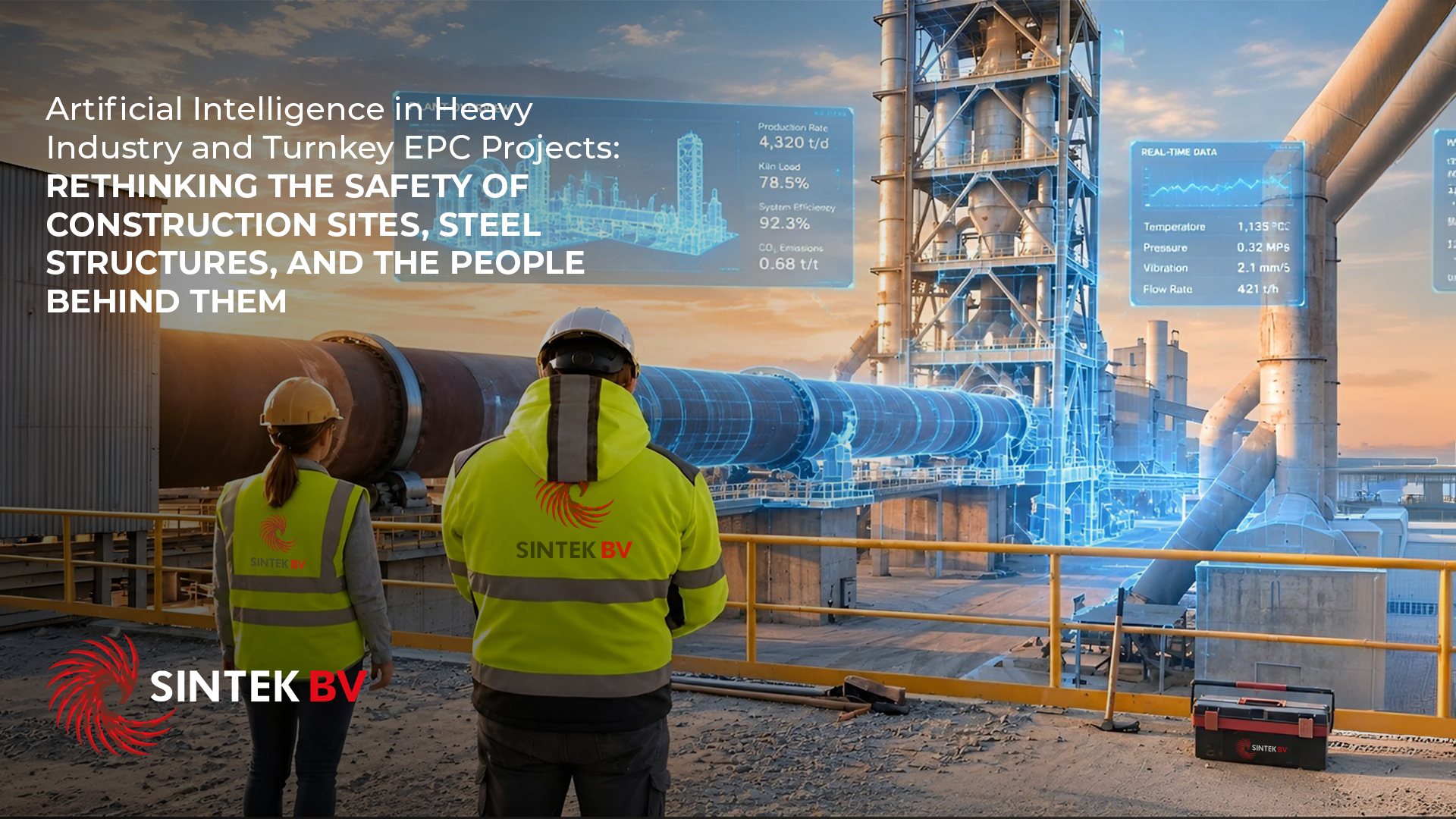
Today, artificial intelligence is driving a remarkable digital transformation in engineering, ranging from fluid mechanics simulations to intelligent design optimization. Complex calculations that once took days can now be completed in seconds, while digital twins make it possible to identify potential errors at the design stage, before they materialize in the field. We also actively utilize these technologies to accelerate our business processes and improve operational efficiency.
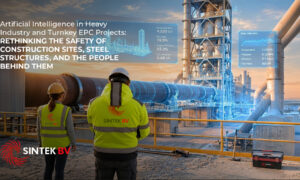
However, in heavy industry, the work does not end with a flawless design on a digital screen. On the contrary, that is where the real challenge begins. The precision installation of thousands of tons of steel structures using heavy lifting equipment, the positioning of kilometers of piping under the harshest climatic conditions, and the installation of refractory bricks inside a massive rotary kiln are all physical realities. No matter how advanced artificial intelligence becomes, it cannot independently respond to the raw dynamics of a construction site, changing weather conditions, muddy terrain, and unforeseen developments. No industrial plant can be brought to life without the practical intelligence, experience, intuition, and physical intervention of skilled workers, site managers, and engineers on the ground.
The Role of Human Trust and Leadership, Not Algorithms, in EPC Projects
Executing a turnkey industrial plant project involves far more than lines of code or purely mathematical equations. Unexpected disruptions in international supply chains, challenges arising from local regulations, the expectations of hundreds of stakeholders from different cultural backgrounds, and the demanding atmosphere of construction sites all require continuous strategic decision-making.
Artificial intelligence can provide us with valuable data, forecasts, and simulations; however, it cannot assume responsibility. It cannot take accountability for risks or establish the trust required at the negotiation table through direct human interaction. Leadership in project management means taking the initiative within seconds during a crisis, motivating teams, and managing human relationships. This is why strategic decision-making in our industry will continue to be guided by people.
The Evolution of Tasks: Replacing Routine with Strategic and Creative Thinking
One of the most important insights emerging from analyses of the future of work is that it is not entire professions that are changing, but rather the routine tasks within them.
We experience this transformation firsthand in our international projects every day. Our teams no longer need to spend hours on repetitive copy-and-paste drawings or time-consuming routine calculations. As AI-powered tools take on much of this background workload, our engineers and specialists can direct their expertise toward broader and more strategic areas:
- Decarbonization and green transformation technologies,
- Waste Heat Recovery (WHR) systems that enhance energy efficiency,
- Advanced grinding solutions for cement and industrial plants,
- Innovative engineering approaches shaping the future of the industry.
Technology does not exclude people. On the contrary, by freeing them from repetitive tasks, it allows their creative, analytical, and strategic capabilities to reach their full potential.
Moving Forward Together at the Construction Sites of the Future: People, Technology, and Collective Intelligence
One of the greatest misconceptions in discussions about industrial transformation is viewing technology and people as competitors. Artificial intelligence is one of our most powerful digital assistants; however, people remain at the helm. The experience gained on construction sites, at the office, in meeting rooms, and throughout project execution encompasses intuition and a depth of understanding that machines cannot fully replicate.
At Sintek, our vision is built on an engineering culture that places people at its center. While integrating technology into our business operations, we never lose sight of the fact that our true strength comes from the people we work with, their experience, and their commitment.
No Industrial Plant Is Truly Complete Without the Human Touch
Heavy industry is where iron, steel, fire, and human effort come together in their most tangible form. Regardless of how automated factories become, when the construction of these massive plants is complete, the proud silence that settles over the construction site finds its true meaning in the people who have invested their sweat, knowledge, and expertise in bringing the project to life.
Across all the turnkey projects we undertake on a global scale, one truth remains clear: No matter how far artificial intelligence advances, the most resilient and indispensable force shaping the future of industry is the human being. From the skilled workers carrying out physical tasks on site and the engineers developing the designs to the minds shaping strategy and the vision driving each project forward, people remain at the heart of every achievement.
Because, ultimately, one principle remains unchanged in life, steel, and industry: The future begins where people connect with one another, where expertise meets dedication, and where human effort makes a tangible impact on the field.

Bunlara Göz Atmak İster Misiniz?